Call for a free radon mitigation quote
Licensed, local Salt Lake Valley radon contractors. Free for homeowners.
Tested at 4 pCi/L or higher? One call connects you with a licensed Utah radon contractor who serves your part of the valley. Most systems are installed in a day.
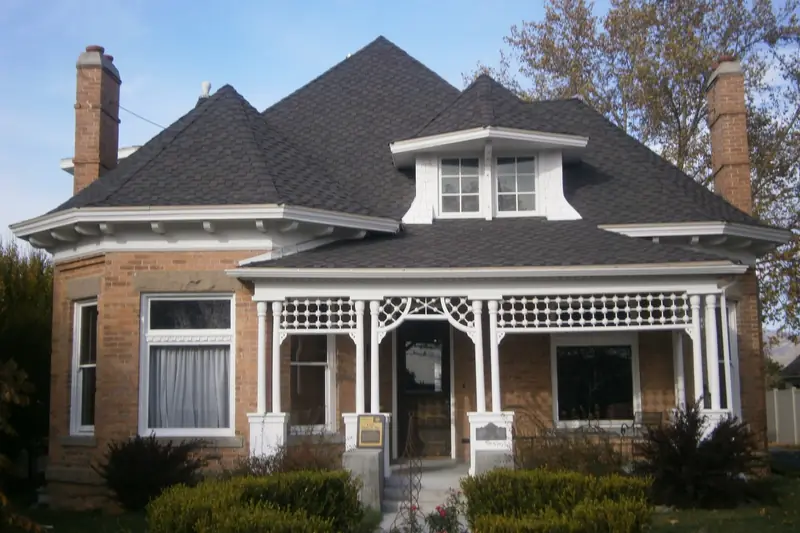
Radon mitigation in the Salt Lake Valley
Licensed contractors we refer handle the whole job, from design through the post-install test:
Basements and slab homes
A pipe and fan pull radon from under the floor and vent it above the roof. How sub-slab systems work →
Crawl spaces
A sealed membrane over the dirt floor with suction underneath, EPA's most effective crawl-space method. Details →
Buying or selling
A written bid in time for your due-diligence deadline, and a retest before closing. Home-sale guide →
Fans, checkups and new homes
Fans typically last about 15 years, and a builder's passive pipe usually just needs a fan. New construction →
How it works
- Call (801) 854-8750 with your test result, city and foundation type.
- We connect you with a licensed contractor who serves your area, for a written quote.
- Installation usually takes a day: a suction point, a pipe, a fan outside living space, and a gauge so you can see it's working (Source: EPA). Retest afterward, then every two years (Source: Utah DEQ).
What it costs
A typical Utah system costs about $1,800–$2,000 (Source: Utah DEQ), plus $8–$10 a month to run the fan. Slab and basement homes with one suction point usually cost less; crawl spaces, combination foundations and finished basements usually cost more. Cost factors and estimator →
Is radon common here?
Yes. In Utah's state test data, 38.6% of short-term tests in Salt Lake County (2006–2019) were at or above EPA's 4 pCi/L action level, and northeast Sandy averaged 7.0 pCi/L (Source: Utah IBIS). Nationally, EPA estimates about 1 in 15 homes is that high (Source: EPA). Radon levels by area →
Good to know in Utah
Licensing
Since 2009, radon systems must be installed by a licensed contractor (Source: Utah DEQ). NRPP certification is recommended but not required; a 2026 bill to require it failed (Source: bill tracker). Licensing vs. certification →
Home sales
Sellers aren't required to fix radon in Utah. It's negotiated: a seller-installed system, a credit, or funds held at closing (Source: Utah DEQ). Walkthrough →
Haven't tested yet?
Utah DEQ sells test kits for about $11 including the lab fee (Source: Utah DEQ). Test your lowest lived-in level with the house closed up. Testing guide →
Get more than one bid
Utah DEQ suggests three (Source: Utah DEQ). Every contractor we refer is licensed in Utah, and you're never obligated to hire them. How we work →
Areas we serve
Salt Lake County, with local data guides for Sandy, South Jordan, West Jordan, Herriman and Riverton, Draper, Millcreek and Holladay. We also serve Salt Lake City, Murray, Cottonwood Heights, Midvale, Taylorsville, West Valley City, South Salt Lake, Bluffdale, Kearns and Magna. All areas →
Common questions
Is 2.7 pCi/L safe? EPA says no level is completely safe and recommends considering a fix between 2 and 4 (Source: EPA).
Does opening windows fix it? Only for a while: levels typically return within about 12 hours of closing up (Source: EPA).
Is there financial help? Qualifying Salt Lake County families may get help from Green and Healthy Homes (Source: Utah DEQ).
Sources
Last reviewed October 22, 2026.
- Consumer's Guide to Radon Reduction: How to Fix Your Home (2016), U.S. Environmental Protection Agency. Accessed October 22, 2026.
- High radon levels? What's next, Utah Department of Environmental Quality. Accessed October 22, 2026.
- Indoor radon levels by county and ZIP, query module (short-term tests 2006–2019; dataset updated Jan. 31, 2020), Utah Dept. of Health and Human Services / Utah DEQ Indoor Radon Program. Accessed October 22, 2026.
- Home Buyer's and Seller's Guide to Radon (EPA 402/K-24/001, rev. March 2024), U.S. Environmental Protection Agency. Accessed October 22, 2026.
- State qualifications for radon mitigation professionals, Utah Department of Environmental Quality. Accessed October 22, 2026.
- HB0563 Radon Amendments: status (strike enacting clause, filed March 6, 2026), Better Utah Institute bill tracker. Accessed October 22, 2026.
- Radon and real estate transactions in Utah, Utah Department of Environmental Quality. Accessed October 22, 2026.
- Testing your home for radon, Utah Department of Environmental Quality. Accessed October 22, 2026.

