Radon testing in Salt Lake City
Already have a result? Jump to reading your result. Haven't tested yet? Utah's state program sells kits for about $11, and testing right is mostly about timing and placement.
Quick answers. Use a short-term test (2–7 days) for a fast answer, or a long-term test (90+ days) for a year-round average (Source: EPA). Utah DEQ sells a short-term kit for about $11, lab fee included (Source: Utah DEQ). Test in the lowest level you use regularly, with windows and doors closed. 4 pCi/L or higher: fix the home. 2–4: consider fixing (Source: EPA).
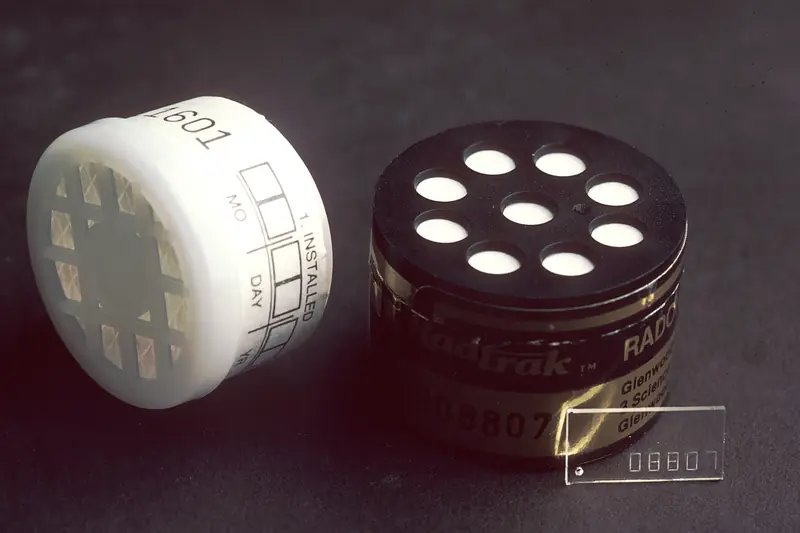
Where to get a test kit in Salt Lake
- Utah DEQ's radon program: low-cost short-term kits, about $11 including the lab fee. Leave it in your basement or lowest level for two to four days, mail it back, and the lab emails your results (Source: Utah DEQ).
- Local health departments and partners sell kits too. DEQ keeps the current list (Source: Utah DEQ).
- During a home sale, your home inspector can usually run a test on request (Source: Utah DEQ).
We don't sell test kits, and we don't get paid for kit sales.
Short-term vs. long-term tests
| Short-term | Long-term | |
|---|---|---|
| How long | 2–90 days; most kits 2–7 days | More than 90 days |
| What it tells you | A snapshot, which can swing with weather and season | Closer to your year-round average |
| Best for | A fast first answer; home sales | Confirming a borderline short-term result |
| Common devices | Charcoal canister, electret, continuous monitor | Alpha-track, electret |
Source: EPA (Source: EPA). EPA says any test should run at least 48 hours; some devices need longer (Source: EPA).
When to test in Salt Lake: winter and closed-house conditions
Radon levels vary from day to day and season to season (Source: EPA). A short-term test needs closed-house conditions: windows shut and doors closed except for normal coming and going, starting 12 hours before the test and lasting the whole test. Don't run fans that bring in outside air (Source: EPA). In Salt Lake that also means turning off evaporative (swamp) coolers and whole-house fans (Source: Utah DEQ).
That's why winter is a practical time to test here: the house is already closed up, and you're not fighting summer cooling habits. January is National Radon Action Month, and many Utah campaigns push testing then. Two more EPA rules:
- Don't run a test shorter than four days during severe storms or high winds (Source: EPA).
- Run heating and air conditioning normally. For tests under a week, use only AC that recirculates indoor air (Source: EPA).
Where to put the test
- In the lowest level of the home that could be used regularly, finished or not (Source: EPA)
- At least 20 inches above the floor, where it won't be disturbed
- Away from drafts, high heat, high humidity and exterior walls (Source: EPA)
- Not in a kitchen, bathroom or laundry room (humidity and fans)
Reading your result
| Your result | What EPA says | What most Salt Lake homeowners do next |
|---|---|---|
| Below 2 pCi/L | Below EPA's consider-fixing level. Note: national indoor average ≈ 1.3, outdoor air ≈ 0.4 | Retest every couple of years or after major renovations |
| 2 to 3.9 pCi/L | "Consider fixing" (Source: EPA) | Often a long-term test to confirm, then decide. A result like 2.7 is above the "consider" line, not an emergency |
| 4 pCi/L or higher | "Fix the home" (Source: EPA) | Confirm with a second test if you only have one, then get bids |
| 10+ pCi/L | Same advice: fix the home | Act sooner rather than later; a quick second short-term test is enough to confirm |
EPA's view is that no radon level is completely safe: levels below 4 still carry some risk, and most homes can be brought to 2 pCi/L or below (Source: EPA). Radon is the second-leading cause of lung cancer in the U.S., and the risk is especially high for smokers (Source: EPA). If you're worried about your health, talk to your doctor; we can't give medical advice.
Confirming a high result
EPA's guidance for homeowners: if a short-term test is 4 or higher, do a second test before fixing. A long-term follow-up gives a better year-round picture; a second short-term test is faster (Source: EPA). In a home sale, use the real-estate protocols on our home-sale page.
Already tested high?
That's who this site is for. Next steps:
- Read what mitigation costs in Salt Lake and try the estimator.
- Check how licensing and certification work in Utah.
- Call (801) 854-8750. We'll connect you with a licensed Utah contractor for a written bid.
After a system is installed, test again no sooner than 24 hours and within 30 days (Source: EPA). Utah DEQ recommends testing every two years after that, even with a system (Source: Utah DEQ).
Sources
Last reviewed October 22, 2026.
- Home Buyer's and Seller's Guide to Radon (EPA 402/K-24/001, rev. March 2024), U.S. Environmental Protection Agency. Accessed October 22, 2026.
- Testing your home for radon, Utah Department of Environmental Quality. Accessed October 22, 2026.
- Where to purchase radon test kits, Utah Department of Environmental Quality. Accessed October 22, 2026.
- Radon and real estate transactions in Utah, Utah Department of Environmental Quality. Accessed October 22, 2026.
- Consumer's Guide to Radon Reduction: How to Fix Your Home (2016), U.S. Environmental Protection Agency. Accessed October 22, 2026.
- High radon levels? What's next, Utah Department of Environmental Quality. Accessed October 22, 2026.
